Spring Statement and OBR Forecasts 2026

Geopolitical uncertainty - particularly the rapidly evolving situation in the Middle East - adds an important layer of caution to any economic assessment. These global developments have the potential to influence energy prices, inflation, borrowing costs and overall market sentiment, which may in turn affect the accuracy or durability of the forecasts and observations that follow…
On 3 March 2026, Chancellor Rachel Reeves delivered the UK Spring Statement, accompanied by updated forecasts from the Office for Budget Responsibility (OBR). As expected, the update focused on economic stability rather than new housing reforms, reflecting the government’s commitment to limiting major fiscal decisions to a single annual event.
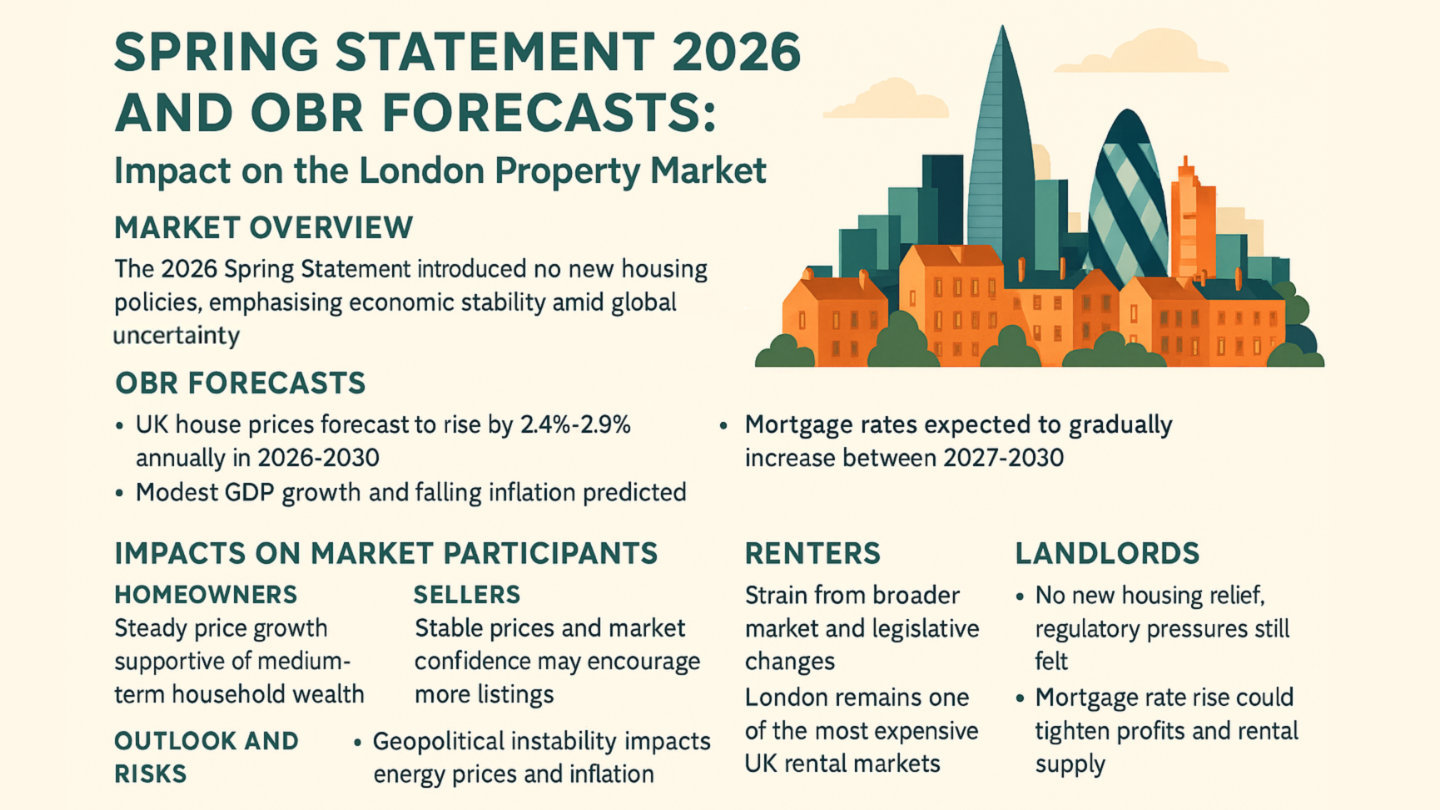
Market Overview: Stability, Not Reform
The Spring Statement introduced no new housing taxes or market interventions. This predictability has been welcomed by some who value a steady policy environment, while others argue it represents a missed opportunity to address longstanding issues around supply, affordability and planning.
The OBR’s refreshed forecasts now provide the main guidance for understanding the broader economic context that will shape the housing market in the years ahead.
OBR Forecasts Relevant to Property
The OBR’s projections set out a moderate economic trajectory:
- House prices are expected to rise by around 2.4% to 2.9% annually between 2026 and 2030, broadly matching income growth.
- GDP growth is forecast to be 1.1% in 2026, increasing modestly over subsequent years.
- Inflation is projected to fall back toward the Bank of England’s 2% target later in 2026 and remain stable.
- Mortgage interest rates, after recent declines, are expected to rise gradually from about 4.1% now to around 4.5% between 2027 and 2030.
These forecasts set the tone for London’s property market, which continues to face persistent pressures from strong demand and limited supply.
| Feature - scroll to continue with content... |


| continue reading article... |
Impact on Key Market Participants
Homeowners
For existing homeowners in London, the outlook of modest price growth suggests property values will continue rising, though at a slower pace than seen in previous market cycles. This supports household wealth stability, especially for those who have owned their homes for many years. However, the expectation of rising mortgage rates later in the decade may increase monthly costs for those due to remortgage.
Sellers
Steady but unspectacular price growth may encourage more sellers back into the market, helping normalise activity levels after the volatility seen in 2025. Yet, without major new housing policies to boost affordability or stimulate demand, the overall pace of transactions may remain constrained.
Buyers
For buyers - particularly first-time purchasers - the outlook presents both opportunities and challenges:
- A stable economic backdrop and consistent price growth may provide greater confidence when committing to a purchase.
- Mortgage rates remain lower than their recent peaks, and an expanding range of low-deposit products has helped some buyers enter the market.
- Yet rising rates expected later in the decade, combined with London’s high price-to-income ratios, may limit affordability for many households.
Renters
Rental conditions continue to be shaped by both market fundamentals and wider legislative changes. Recent reforms such as the abolition of no-fault evictions have shifted landlord behaviour and influenced rental supply.
While improving buyer affordability may ease rental demand slightly in some areas, London remains one of the UK’s most expensive and competitive rental markets.
Landlords
Landlords received no new relief or support in the Spring Statement. Existing regulatory and tax pressures continue to affect investor confidence. With mortgage rates projected to rise in coming years, financing costs for buy-to-let investors may increase, potentially narrowing returns and prompting some to exit the market - tightening rental supply further.
Outlook and Risks
The OBR’s forecasts suggest a largely stable outlook, but several risks could influence the trajectory for London property:
- Geopolitical uncertainty, particularly recent developments in the Middle East, could impact energy prices, inflation and broader economic sentiment.
- Supply constraints - both in existing stock and new-build delivery - remain a central challenge, continuing to drive price and rent pressures.
- With the government prioritising policy stability over large-scale housing reform, market conditions are likely to evolve gradually rather than undergo dramatic shifts.
This article is for informational purposes. Always seek professional advice before making any property and/or financial decisions.