London Landlords and the PRS Database Rollout

England's new Private Rented Sector Database will begin rolling out from December 2026, with London landlords required to register from July 2027. Here's what the new system means, what information will be required and why preparing early could make the process considerably easier.
Attention is beginning to shift from tenancy reform to compliance as the government's new property registration regime moves towards implementation.
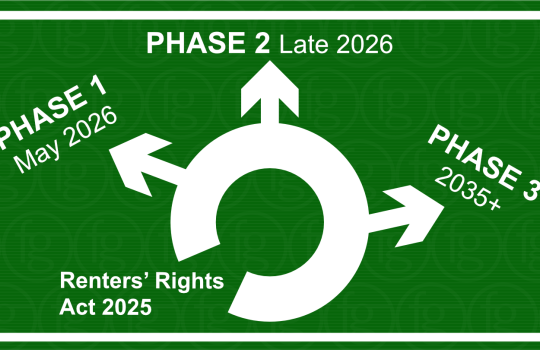
The abolition of Section 21 "no-fault" evictions and the move to periodic tenancies were among the most significant reforms introduced by the Renters' Rights Act. The next stage of implementation centres on the rollout of the government's new Register your rental property service and the wider Private Rented Sector (PRS) Database.
For London landlords, the key question is not whether registration will become part of the compliance landscape, but how soon preparations should begin.
A New Layer of Regulation
The PRS Database was established as part of the Renters' Rights Act reforms and is intended to create a national register of private landlords and rented properties in England. The government says the database will help provide tenants with better information while giving local authorities access to information intended to support enforcement activity in the private rented sector.
While attention has largely focused on tenancy reform and possession rights, the registration regime represents a significant operational change for landlords
When Will London Landlords Need to Register?
The registration service is being introduced on a regional basis rather than launching across England simultaneously.
The rollout begins in the West Midlands on 15 December 2026 before extending across England during 2027. For London, registration opens on 15 July 2027, with registrations required to be completed by 14 October 2027.
Registration deadlines are determined by the location of the rental property rather than the landlord's home address.
Key Dates:
15th December 2026 - Registration service begins rolling out in England.
15th July 2027 - Registration opens for London rental properties.
14th October 2027 - Deadline for London registrations.
| Feature - scroll to continue with content... |


| continue reading article... |
What Information Will Be Required?
Landlords must register through GOV.UK One Login. The government confirms that landlords remain ultimately responsible for registration, even where a letting agent or property manager assists with the process.
Information required as part of registration includes:
- Landlord identity and contact details.
- Property address information.
- Occupancy and bedroom information.
- Rent information.
- Relevant health and safety documentation, including gas, electrical and energy performance information where applicable.
- Ownership and management information.
Joint landlords must each register individually, although only one property registration is required for a jointly owned property.
Why Preparation Matters
Although London's registration period does not begin until July 2027, landlords will need to ensure key records are current and accessible before registering.
That includes Gas Safety Certificates, Energy Performance Certificates, Electrical Installation Condition Reports and accurate tenancy information. The registration process also requires information about property occupancy and management arrangements.
Fees and Ongoing Responsibilities
The government has confirmed an annual registration fee of £65 per property. Registrations must be renewed annually.
The legislation also provides enforcement powers where registration requirements are not met. Landlords will be responsible not only for registering but also for ensuring relevant information remains accurate and up to date.
| Feature - scroll to continue with content... |


| continue reading article... |
Looking Ahead
The wider Renters' Rights reforms also include the introduction of a Private Rented Sector Landlord Ombudsman, designed to provide tenants with a free, independent route to escalate complaints about landlords and seek redress outside the court system. Membership of the scheme will be mandatory for private landlords. At the time of writing, a launch date for the scheme has yet to be confirmed.
For landlords, the new regime introduces additional registration and compliance requirements. For tenants, it is intended to provide greater visibility of who owns and manages privately rented homes, together with clearer information about property standards.
As the registration programme begins to roll out, the practical message is straightforward: ensuring records are complete, compliant and readily accessible now should help landlords navigate the registration process more efficiently when London's registration window opens in 2027.
Sources & Further Reading:
Register your rental property service: guidance for landlords (GOV.UK)
Register your rental property service: guidance for letting agents and property managers (GOV.UK)
Guide to the Renters' Rights Act (GOV.UK)
Renters’ Rights Act 2025 – Part 2, Chapter 3: Private Rented Sector Database (legislation.gov.uk)
The Private Rented Sector Database Regulations 2026 (legislation.gov.uk)
Get ready: ‘Register your rental property’ service (Housing Hub)
Private Rented Sector Database Regulations 2026 Debate (Hansard)
Important Information: Every effort has been made to ensure the accuracy of this article at the date of publication. However, legislation, regulations and government guidance are subject to change. The content is intended as general information only and should not be regarded as legal, financial or professional advice. Specific advice should be obtained in relation to individual circumstances, properties or tenancies.