New Landlord Register Could Affect Possession Orders Across England

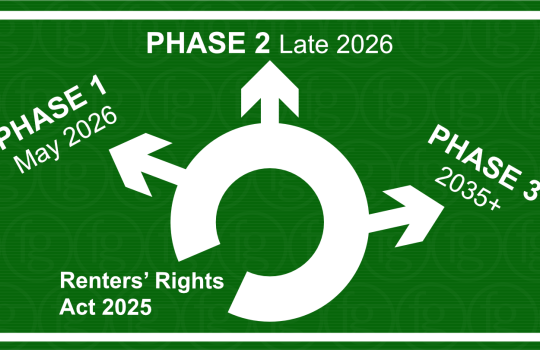
England's private landlords face another regulatory change as the Government prepares to launch its new "Register your rental property" service from 15 December 2026.
The scheme, which forms part of the wider Private Rented Sector Database, will require landlords to register qualifying rental properties and pay an annual fee of £65 per property. For larger portfolio landlords, the costs could quickly mount, with ten properties generating a £650 annual bill.
However, the fee is only part of the story...
The register is designed to create a comprehensive digital record of England's private rented sector, giving councils greater visibility of landlords, rental properties and compliance information. Landlords will be required to provide details about themselves, their properties, rent levels and key safety documentation, including gas and electrical safety certificates, EPC information and relevant licensing details.
Registration will be introduced region by region. For London landlords, the registration window opens on 15 July 2027 and closes on 14 October 2027. Crucially, the timetable is based on the location of the rental property rather than where the landlord lives.
The Government says the database is intended to improve transparency and make it easier for councils to identify potential non-compliance within the private rented sector.
The legislation provides for civil penalties of up to £7,000 for certain breaches and, in some circumstances, penalties of up to £40,000 for more serious breaches, continuing breaches or the provision of false or misleading information.
More Than a Financial Penalty
For many landlords, the most significant consequence may not be the fine itself.
The legislation links compliance with the database to a landlord's ability to obtain a possession order through the courts. Landlords who are required to register but fail to maintain an active registration may face restrictions on obtaining a possession order where registration is a legal requirement.
That means the register becomes more than an administrative requirement. It becomes an important part of complying with the wider regulatory framework and maintaining access to key landlord remedies.
 |
Dominic Kidney, Fuller Gilbert Lettings Manager: |
While the £65 annual fee may attract the headlines, the more significant issue for many landlords will be ensuring that registration remains active and accurate when possession proceedings become necessary.
| Feature - scroll to continue with content... |


| continue reading article... |
What Landlords Will Need to Provide
Landlords will be required to provide information about themselves and each rental property, including ownership details, occupancy information, rent levels and relevant licensing information.
The register is also expected to require key compliance documentation, including gas safety records, electrical safety certification and EPC information where applicable.
Importantly, registration is not expected to be a one-off exercise. Landlords will be required to keep information up to date as circumstances change.
Agents Can Help, But Responsibility Remains With Landlords
Letting and managing agents will be able to assist with aspects of the registration process. However, responsibility for compliance remains with the landlord.
For landlords with multiple properties or different managing agents, clear arrangements will be needed to ensure information remains accurate and current.
| Feature - scroll to continue with content... |


| continue reading article... |
A New Layer of Compliance
The Government has indicated that a public-facing element of the service is planned, allowing access to selected information about landlords and properties, although the scope and timing remain subject to further development.
For landlords, the introduction of the register represents another compliance obligation alongside existing licensing, safety and property management requirements.
With the service opening in December, landlords should use the coming months to ensure safety certificates, EPCs, licensing information and tenancy records are accurate and up to date.
For London landlords, one date stands out above all others: 14 October 2027.
Beyond merely administrative
The Government's objective is a more transparent and accountable private rented sector. Whether the database ultimately achieves that objective remains to be seen.
What is already clear is that the register will become an important part of the regulatory landscape. By linking registration to possession proceedings, the Government has elevated the significance of the database beyond a purely administrative exercise. For many landlords, maintaining an active registration is likely to become an important part of wider regulatory compliance.
Government information;
https://www.gov.uk/government/news/stronger-protections-and-greater-confidence-for-renters
https://housinghub.campaign.gov.uk/renting-is-changing/get-ready-to-register/
This article was prepared using information published by the UK Government, the National Residential Landlords Association (NRLA), Propertymark and other industry sources as of September 2026. it is intended as a general overview of the proposed rental property registration requirements in England and is not legal advice. The legislation, secondary regulations and Government guidance may change. Landlords should refer to the latest official guidance and seek independent professional or legal advice where appropriate before taking action.